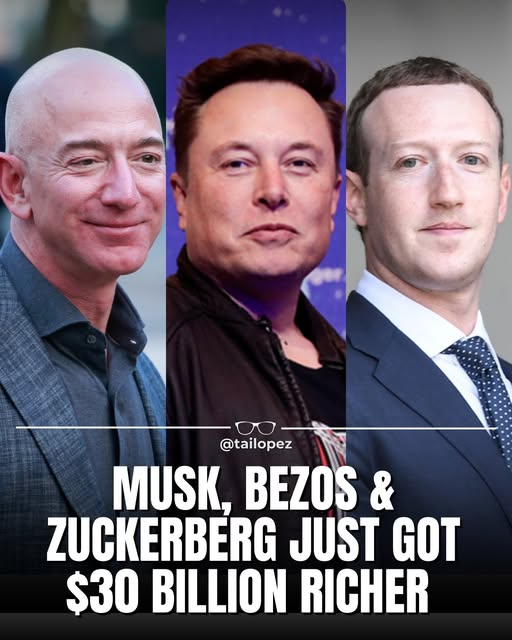
On May 12, 2025, three of the world’s most prominent tech billionaires — Elon Musk, Jeff Bezos, and Mark Zuckerberg — experienced a dramatic increase in their collective net worth. In an extraordinary single-day surge, the combined fortunes of these tech titans grew by more than thirty billion dollars. This massive boost in wealth occurred as a direct result of a major policy shift by the United States government, which sent shockwaves through global financial markets.
The United States announced a pause on the implementation of new tariffs on China, marking a significant de-escalation in ongoing trade tensions between the two economic superpowers. This unexpected move sparked immediate optimism among investors and triggered a broad-based rally in the stock market. Technology stocks, in particular, responded with sharp gains, as many of the largest tech companies have deep ties to global supply chains and rely heavily on international trade stability.
Elon Musk, the CEO of Tesla and SpaceX, saw his fortune surge by several billion dollars as Tesla’s stock price soared in response to the market rally. Tesla, with its extensive global production network and dependency on material imports, was one of the key beneficiaries of the news. Investors reacted positively to the potential for reduced costs and fewer disruptions in the electric vehicle supply chain. SpaceX, though not publicly traded, also stands to benefit indirectly from improved investor sentiment surrounding Musk’s broader portfolio and influence in the tech space.
Jeff Bezos, founder of Amazon and owner of Blue Origin, also experienced a significant increase in net worth. Amazon’s shares jumped as analysts projected a boost in global e-commerce activity, driven by the easing of trade restrictions and renewed confidence in international logistics. Amazon, with its vast and complex international infrastructure, is often sensitive to changes in global trade dynamics. Reduced tariffs mean lower operating costs and potentially higher profit margins for one of the world’s largest online retailers.
Mark Zuckerberg, the founder and CEO of Meta Platforms, Inc., saw Meta’s stock rise sharply as well. The company, which includes Facebook, Instagram, and WhatsApp, is heavily dependent on advertising revenue, a sector that thrives in bullish market conditions. With investor confidence returning and companies increasing their marketing budgets, digital ad spending is expected to rebound significantly. Additionally, Meta’s investments in AI and virtual reality technologies, including its ambitious metaverse initiatives, gained renewed investor interest during the day’s rally.
The collective gains of these three influential tech leaders reflect the broader strength of the technology sector and its sensitivity to geopolitical and economic policy developments. A single policy shift — the halting of new tariffs — sent a strong signal to markets that the U.S. may be entering a more cooperative phase in its trade relationship with China. For companies that rely on global production, access to materials, and international consumer markets, such a development is immensely positive.
This day stands as a striking reminder of how closely financial markets are tied to policy decisions. It also demonstrates the enormous scale of wealth concentrated in the hands of leading tech entrepreneurs and the influence they wield over market sentiment. While the average investor may not experience the same level of gain, the ripple effects of such rallies can lead to improved investment portfolios, increased retirement fund values, and greater economic optimism.
In summary, May 12, 2025, will be remembered as a landmark day in financial markets. Elon Musk, Jeff Bezos, and Mark Zuckerberg each benefited significantly from the U.S. government’s pause on new tariffs targeting China. With over thirty billion dollars added to their collective net worth in just one day, these three tech giants have once again underscored the powerful intersection of politics, policy, and technology-driven wealth in today’s global economy.