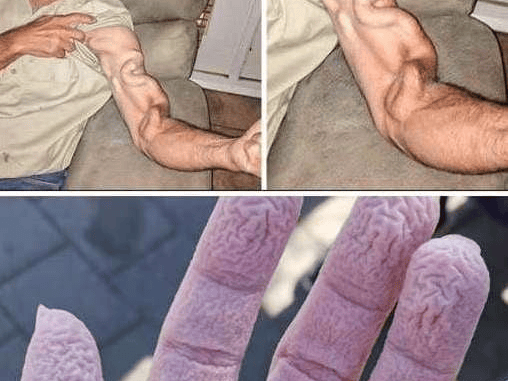
Understanding the intricate mechanics of human anatomy often leads us to explore fascinating and rare physiological phenomena that challenge our everyday perceptions of the human body. In the shared digital media, a compelling image presentation showcases an elderly man with glasses and a mustache sitting comfortably in an armchair while demonstrating a highly unusual structural anomaly in his left arm. This particular visual content has sparked intense curiosity across social media platforms, drawing the attention of medical enthusiasts, researchers, and curious onlookers alike. When examining the upper portion of the image, one can clearly observe a bizarre, highly pronounced rippling effect stretching across the bicep and forearm muscles that looks almost surreal. This undulating muscular structure contorts dramatically, creating deep ridges and valleys under the skin that look vastly different from standard muscular hypertrophy or typical aging patterns. Many viewers encountering this striking imagery immediately begin searching for scientific explanations regarding muscle spasms, severe cramping, or rare genetic conditions affecting connective tissues. To provide an insightful analysis, the visual presentation also pairs this muscular anomaly with a close-up shot of human fingers showing extreme, deep wrinkling and prune-like skin texture. This secondary image of wrinkled fingertips typically occurs after prolonged exposure to water, but when placed in this context, it prompts a deeper discussion about peripheral nervous system responses and vasoconstriction. When we analyze the primary subject, the elderly man appears perfectly calm and relaxed, suggesting that this striking physical manifestation might not be causing him immediate or acute physical pain. Medical experts online often discuss conditions like fasciculations, myotonic disorders, or benign cramp-fasciculation syndrome when trying to decode such unique muscular movements. The seamless blending of these two distinct anatomical anomalies creates a powerful visual narrative about the hidden complexities of human skin, nerves, and muscle fibers. From an online search optimization perspective, topics focusing on weird medical anomalies, muscle contortions, and human body mysteries always generate high user engagement and lengthy discussions. Exploring why muscles ripple or why skin wrinkles so intensely helps educate the public on how the nervous system communicates with our physical extremities. The dramatic presentation of the arm muscle in the video frames almost mimics a fluid motion captured in a still state, making it highly shareable across various educational forums. Some commentators speculate whether the phenomenon is related to extreme dehydration, localized muscle atrophy, or an extraordinary display of muscle control. Meanwhile, the deeply wrinkled texture of the hand below serves as an excellent reference point for studying how external environments or internal nerve signals affect dermatological patterns. By analyzing this striking visual data, content creators and medical bloggers can craft highly engaging articles that delve into the science of rare muscular disorders. It is crucial to approach such unique human traits with scientific curiosity and respect, recognizing that the human body possesses countless variations. The contrast between the smooth fabric of the armchair and the intensely textured skin and muscle highlights the organic irregularity of biological forms. Many people find themselves fascinated by these visual anomalies because they remind us how much we still have to learn about individual physiological differences. The distinct shape of the rippling muscle tissue raises interesting questions about blood flow, muscle tone, and the elasticity of the surrounding deep fascia layers. Understanding these underlying biological mechanisms requires looking at how motor neurons fire repeatedly to cause such sustained, visible alterations in muscle shape. In the realm of digital media, high-quality images depicting rare human conditions serve as vital tools for raising awareness about understudied health conditions. The elderly man’s cheerful expression adds a unique layer of human interest to the technical curiosity surrounding his distinct physical trait. On the other hand, the severely pruned fingers in the lower frame remind us of autonomic nervous system functions that regulate moisture and grip in wet conditions. Bringing these two topics together allows for a comprehensive exploration of how different systems within the body adapt to unique internal or external stimuli. Audiences interested in physical therapy, sports medicine, and dermatology frequently dissect such media to better understand tissue behavior under unique stress. Every single detail within these frames, from the lighting on the arm to the deep creases in the fingertips, provides essential clues for visual interpretation. By structuring this analytical commentary without arbitrary breaks, we maintain a fluid and highly informative reading experience optimized for educational discovery. The fascination with unusual human anatomy ensures that content focusing on these rare physical expressions remains highly relevant for years to come. Ultimately, this captivating visual display challenges our conventional understanding of biology and encourages a deeper appreciation for the endless diversity found within the human form.