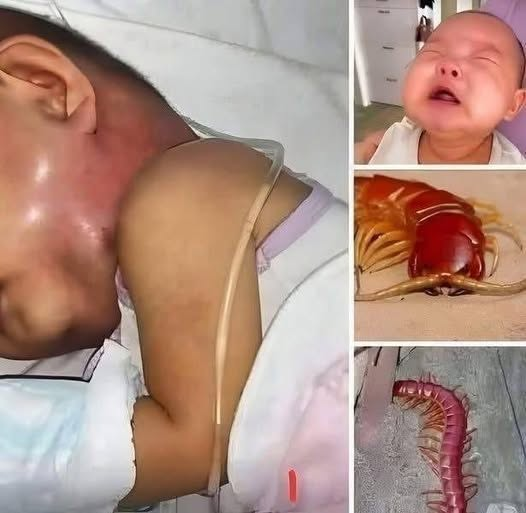
The distressing video highlights a critical medical emergency involving a crying infant who appears to have suffered a painful bite or sting from a large tropical centipede. In the footage, the baby is seen grimacing and weeping in a hospital bed with medical tubing attached to their arm, indicating that immediate healthcare intervention was necessary to stabilize the young patient. On the side of the screen, close-up clips show a massive, multi-legged red and yellow centipede moving aggressively, underscoring the dangerous nature of these predatory arthropods. Such incidents remind parents and caregivers worldwide about the vital importance of pest control and child safety within residential spaces. Centipedes possess venomous fangs known as forcipules, which they use to inject potent venom that causes intense pain, severe swelling, and localized tissue reactions in human victims. For a delicate infant, the physiological response to such an envenomation can be incredibly intense, leading to prolonged crying, fever, and potential systemic symptoms that demand expert pediatric care. Emergency medical technicians and hospital staff are trained to manage these specific types of bites by administering pain relief, cleaning the wound site thoroughly, and monitoring the child closely for any signs of anaphylactic shock or severe allergic reactions. Homeowners living in regions prone to large centipede populations must take proactive measures, such as sealing foundation cracks, removing damp leaf litter near the house, and utilizing pet-safe insecticides to prevent these creatures from entering nurseries. Witnessing a child in such deep distress emphasizes the necessity of keeping emergency contact numbers readily available and knowing the basic steps of first aid for insect and arthropod bites. The contrast between the innocent, vulnerable baby and the menacing appearance of the giant centipede creates a powerful visual narrative about the hidden hazards lurking in certain environments. Medical professionals advise that if a centipede bite occurs, the area should be washed immediately with soap and water, and cold compresses should be applied to reduce the throbbing discomfort while seeking professional medical advice. Pediatric emergencies involving venomous creatures require swift action because an infant’s smaller body mass makes them significantly more susceptible to the toxic effects of the venom compared to an adult. Educational videos of this nature serve as crucial public health warnings, urging communities to stay vigilant and educated on the wildlife indigenous to their geographical areas. The visible discomfort of the newborn in the hospital setting highlights the emotional toll these freak accidents take on families who must watch their little ones undergo painful treatments. By sharing these cautionary stories, awareness is raised regarding the seasonal movements of pests, which often seek shelter indoors during periods of heavy rain or extreme heatwaves. Ensuring that cribs and sleeping areas are elevated and kept well away from walls can further minimize the risk of crawling insects reaching a resting child. Ultimately, the successful treatment and recovery of the infant depend heavily on the speed of the parental response and the efficiency of the medical team handling the toxicological emergency.