The Reality of Structural Collapse: Analyzing Disaster Footage and Safety Protocols
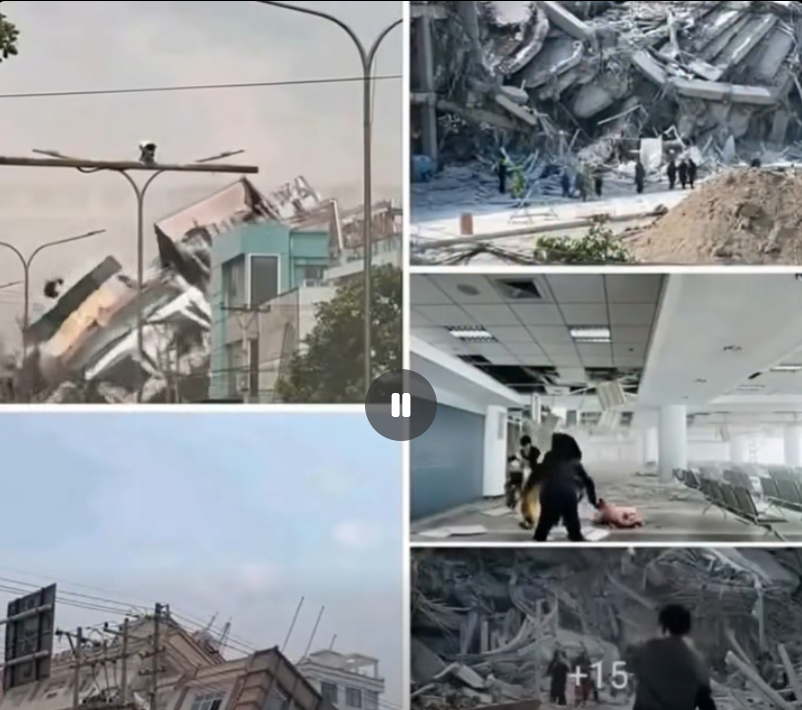
This shocking video captures the exact moments when multi-story buildings succumb to immense physical pressure and violently collapse into piles of dust and rubble. In the initial segments, an entire urban structure can be observed tilting precariously before completely flattening down into the street below. Thick plumes of grey smoke and debris immediately fill the air as the surrounding infrastructure is shaken by the violent impact. Onlooking witnesses can be heard reacting in sheer panic as power lines shake and the surrounding landscape is altered in a matter of seconds.
The internal security footage included in the video provides an intimate, horrifying look at the chaos unfolding inside these compromised structures. Inside what appears to be an office or public lounge, ceiling tiles suddenly dislodge and collapse violently onto the floor. Terrified citizens are captured on camera sprinting for safety as the very ground beneath them shakes uncontrollably. Some individuals are seen diving under furniture or shielding their heads from the falling debris raining down from the ceiling. The sheer speed of the collapse leaves very little time for evacuation, highlighting the deadly nature of sudden structural failure.
Outside, the aftermath of the disaster reveals a landscape that resembles a war zone, dominated by crushed concrete and twisted metal frames. Emergency rescue teams and first responders can be seen arriving quickly at the epicenter of the destruction to search for survivors. Dressed in protective gear and helmets, these brave individuals navigate the highly unstable pile of ruined concrete blocks. Heavy machinery and excavators are deployed to clear large pieces of debris to aid the urgent search and rescue operations. Every second counts during such critical disaster response efforts, as victims may be trapped deep within the air pockets of the collapsed building.
Understanding the root causes of building collapses is paramount for urban planners, structural engineers, and safety inspectors worldwide. Often, these catastrophic events are triggered by severe natural disasters like high-magnitude earthquakes, landslides, or intense flash floods. However, sub-standard construction materials, poor architectural design, and lack of proper maintenance can also lead to sudden structural compromises. When foundational pillars fail to support the vertical load of a building, a progressive collapse can occur, pulling down the entire structure sequentially. This video serves as a sobering reminder of the critical importance of adhering to strict seismic building codes and engineering standards.
For digital content creators and news outlets, analyzing footage of such natural disasters requires an informative and highly respectful approach. High-quality SEO optimization for disaster analysis articles depends on utilizing targeted keywords such as “building collapse,” “earthquake damage,” and “structural failure safety.” Audiences are drawn to these videos not just for the shocking visuals, but to understand how to protect themselves during similar emergencies. Providing educational guides on earthquake preparedness alongside the analysis can significantly increase user engagement and article authority. It is essential to explain standard survival protocols, such as the “Drop, Cover, and Hold On” technique, to educate the public effectively.
Inside a shaking building, individuals should immediately move away from windows, heavy glass fixtures, and outer walls. Finding shelter under a sturdy table or desk can provide vital protection from falling ceiling panels and light fixtures. Elevators must never be used during an active earthquake or structural emergency due to the high risk of power failure and entrapment. If an evacuation path is clear, individuals should move calmly but quickly to an open outdoor area free from overhead hazards. The physical footage of people running through the crumbling interior in this video underscores how rapidly conditions can deteriorate.
Beyond the immediate physical damage, the socioeconomic impact of such large-scale building collapses is deeply profound for local communities. Displaced families lose their homes, businesses are permanently destroyed, and critical municipal infrastructure is put offline for months. The financial cost of clearing millions of tons of debris and rebuilding modern structures can run into billions of dollars. Furthermore, the psychological trauma experienced by survivors and witnesses of a sudden collapse can last for a lifetime. International aid organizations and local governments must work collaboratively to provide immediate medical, financial, and psychological support.
Modern technology is playing an increasingly vital role in improving disaster response times and structural monitoring. Advanced seismic sensors can now detect early shockwaves, automatically triggering public warning systems and shutting down gas lines to prevent fires. Drones equipped with thermal imaging cameras are regularly used by search teams to locate trapped individuals without risking human lives on unstable rubble. Engineers are also developing smart building materials that can withstand greater lateral forces during intense ground movements. Retrofitting older buildings with base isolators and dampers is another effective method to mitigate the risk of catastrophic failure.
emphasizes why these technological advancements are absolutely necessary. Looking closely at the exterior shots, the way the concrete crumbles reveals how easily unreinforced masonry can disintegrate under stress. When columns snap, the upper floors pancake onto the lower levels, leaving virtually no room for escape. This specific type of “pancake collapse” is one of the most dangerous structural failures that rescue teams can encounter. It requires meticulous shoring and stabilization techniques to prevent secondary collapses while rescuers work underneath the heavy slabs.
Public awareness campaigns are vital to ensure that property owners do not make unauthorized structural alterations that weaken a building’s integrity. Regular safety audits conducted by independent engineering firms can help identify hidden cracks or foundation settling before it is too late. Ultimately, investing in resilient infrastructure is the single most effective way to save human lives and protect cities from total devastation. As urban populations continue to grow rapidly, constructing safe, sustainable, and earthquake-resistant housing must remain a global priority. By studying the painful lessons captured in this video, society can better prepare for future challenges and build a safer world for everyone.