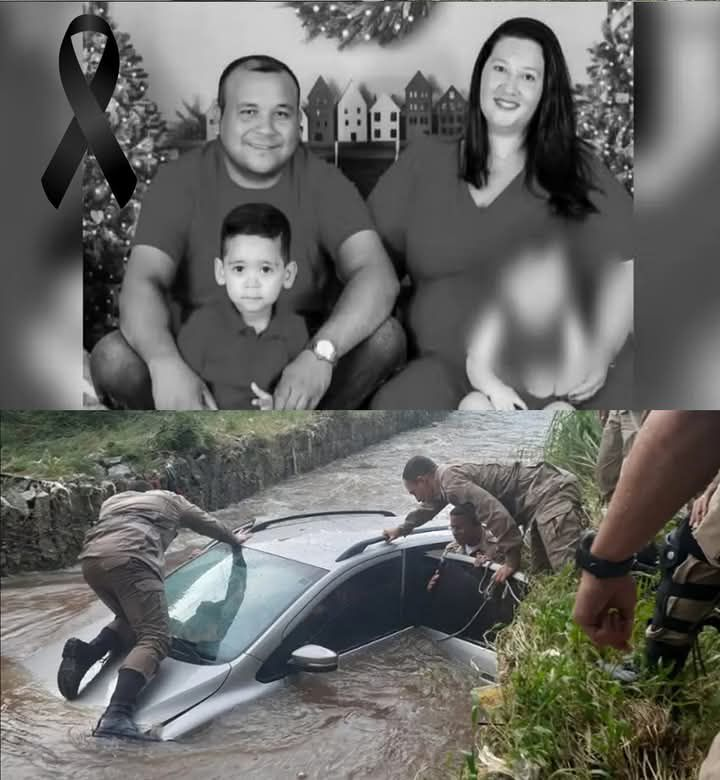
Natural disasters can strike without warning, leaving families in incredibly vulnerable situations within a matter of seconds. The tragic imagery presented in the video serves as a heartbreaking reminder of how quickly a family vacation or a daily commute can turn into a life-threatening emergency. In the top half of the footage, we see a beautiful, smiling family portrait marked by a black mourning ribbon, symbolizing a devastating and profound loss. The bottom half of the screen captures a desperate, real-time rescue mission as emergency responders attempt to pull a submerged vehicle out of a raging, muddy torrent. When flash floods occur, roads quickly transform into deadly rivers, trapping unsuspecting drivers in a fierce fight for their lives. Understanding the basic physics of water and vehicle buoyancy can mean the absolute difference between life and death during a severe weather event. Many drivers mistakenly believe that their heavy vehicles can withstand shallow moving water, but it takes surprisingly little water to lose control completely. Just six inches of fast-moving water can knock an adult off their feet or cause a standard passenger car to lose traction entirely. A mere twelve inches of rushing water is strong enough to float most small cars, sweeping them off the pavement into unpredictable currents. If the water level reaches two feet, even massive SUVs and heavy trucks can be easily carried away by the sheer force of the flood. Once a vehicle enters deep water, it begins to lose contact with the ground and floats like a boat for a very brief period. This initial floating phase is the most critical window of opportunity for the occupants to make a successful escape. If you ever find yourself inside a car that is filling with water, you must act with extreme speed and absolute clarity. The most common mistake people make during a vehicle submersion is panicking or waiting around for emergency services to arrive. Because water pressure quickly mounts against the exterior doors, opening them becomes physically impossible almost immediately. Trying to force open a door against hundreds of pounds of hydrostatic pressure will only exhaust your physical strength and waste precious time. Instead, safety experts around the world teach a simple four-step survival acronym known universally as seatbelt, window, children, out. The very first action you must take the moment your vehicle hits the water is unbuckling your seatbelt immediately. Once your movement is completely unrestricted, you must lower the car windows before the vehicle’s electrical system shorts out completely. Modern electronic windows will usually function for a few minutes underwater, so rolling them down manually or electronically should be done instantly. If the electric windows fail to open, you must be prepared to break the glass using a specialized emergency tool. Carrying a dedicated car safety hammer or a spring-loaded center punch in your glovebox or center console is a life-saving habit. When attempting to break a car window, you should always aim for the bottom corners of the side windows rather than the center. Tempered glass is designed to shatter into tiny pieces, allowing you to create an immediate escape hatch out of the vehicle. It is important to note that front windshields are made of laminated glass, making them incredibly difficult to break through from the inside. If there are children present in the vehicle, you must unbuckle them and push them out through the open window before escaping yourself. Older children should be instructed to exit first, while younger infants must be carried out firmly in your arms. Once everyone has successfully exited the window, you must swim against or across the current toward stable ground or a sturdy structure. If you cannot get the windows open, you must remain calm and wait until the water fills the car to equalize the pressure. When the internal and external pressures match, you will finally be able to open the door, take a deep breath, and swim to safety. Prevention is always the most effective strategy when dealing with severe weather anomalies and flash flood threats. Meteorologists heavily emphasize the phrase turn around, don’t drown whenever heavy downpours threaten local infrastructure. Never attempt to drive through a flooded roadway, even if the water appears shallow or calm on the surface. The road beneath the muddy floodwaters may have already washed away completely, creating a hidden, deep pit. It is also impossible to determine the true speed and depth of water when it is filled with debris and mud. If your vehicle stalls out in rising water, you must abandon it immediately and seek higher ground on foot without hesitation. Property can always be replaced, but human life is entirely irreplaceable, as the somber tone of the video reminds us. Local authorities often issue flash flood warnings via mobile networks, and these alerts should never be ignored by drivers. If you live in an area prone to severe weather, planning alternative routes that avoid low-lying bridges and valleys is essential. Educating your family members about these vital survival steps ensures that everyone knows exactly what to do in a worst-case scenario. First responders risk their own lives daily to pull victims from treacherous conditions, just like the heroic team captured in the footage. These brave men and women use specialized ropes, flotation devices, and heavy machinery to secure vehicles in moving currents. However, emergency personnel cannot always reach a remote or rapidly evolving flood scene in time to save every occupant. Being self-reliant and mentally prepared for sudden automotive emergencies is the ultimate key to improving your survival odds. Communities must continue to invest in better drainage systems and robust flood barriers to protect citizens from unpredictable weather. Sharing educational materials regarding vehicular water survival can help prevent future tragedies and keep families safe during storms. We look back at tragic events not to dwell on fear, but to learn valuable lessons that can protect future generations. The harrowing scene depicted in the video underscores the raw, unforgiving power of mother nature. Let us honor those who have been lost to these natural disasters by committing to safer driving habits during heavy rainfall. Stay informed, prepare your vehicle with safety tools, and always prioritize human life over your vehicle when facing a flash flood.